
Sleep and recovery: half of your training

Ian van der Werf
23 August 2026You train three times a week and nothing moves. The hours in which your body processes that training decide what it gives back.

You train three times a week, you watch what you eat, and nothing has moved for two months. The conversation then tends to go to the programme: different exercises, more volume, maybe a fourth session.
At that point we ask something else in the intake. What time do you go to bed, do you wake up in the night, and how many hours do you get on an ordinary weeknight. With busy people that answer sits around six hours strikingly often. And has done for years.
What happens while you sleep
A session only sets the stimulus. The adaptation you are after arrives in the hours afterwards, and most of it happens while you sleep. Your brain flushes out waste products, consolidates what you practised that day and works through the tension the day brought with it. For most adults that takes seven to nine hours a night.2
Sleep structurally less than that and the training carries on while the processing does not. You stack stimuli on a body that is still busy with the last one. After a few weeks it feels like bad luck or a bad programme, when it is a shortfall.
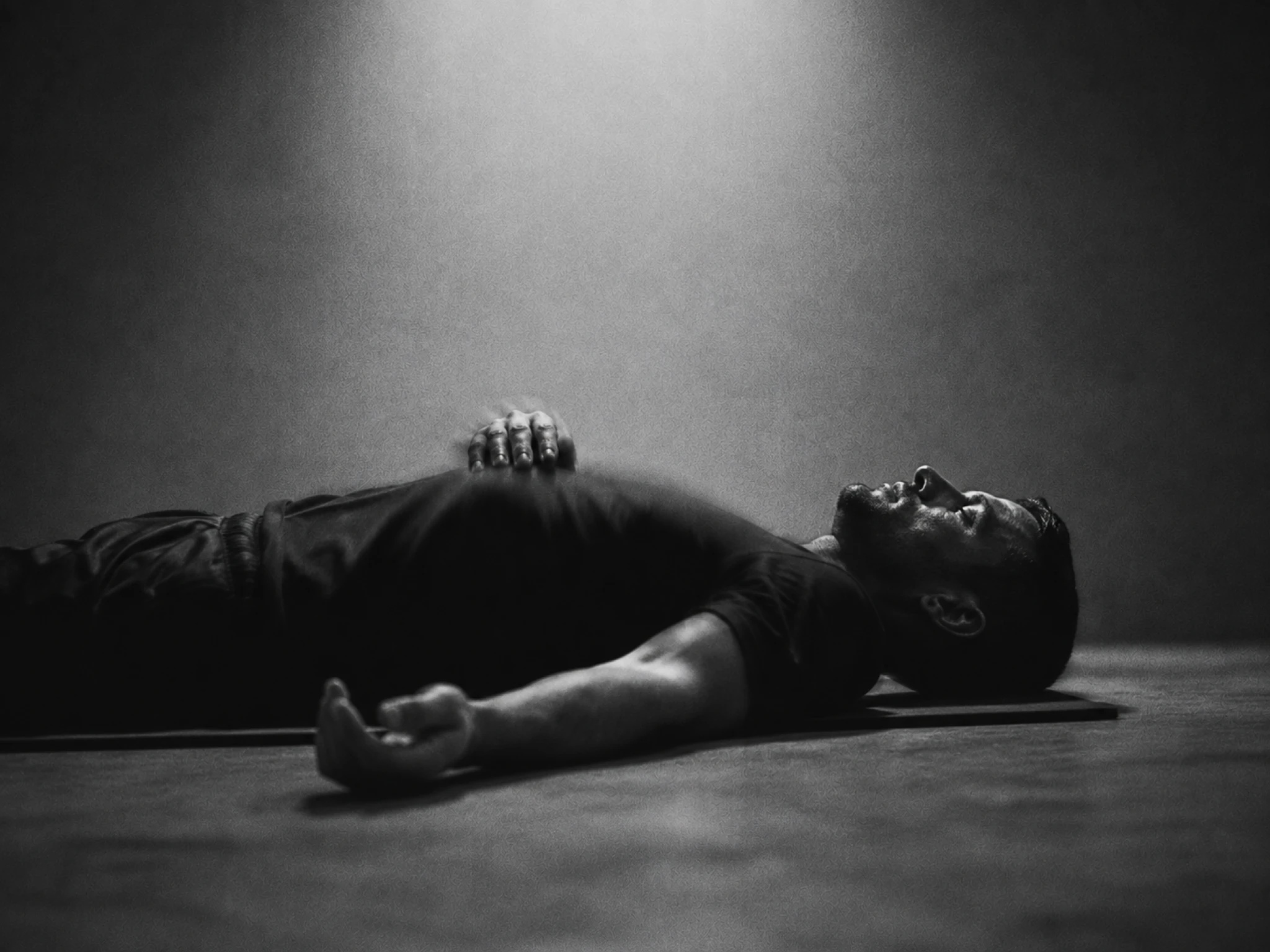
What a short night does to your training
This is better researched than you would expect. In a meta-analysis of studies on acute sleep loss, physical performance after a disrupted night was on average just over seven per cent lower, measured across strength, endurance and explosive work.1
The interesting part is when that loss shows up. Tasks performed in the morning were largely unaffected. The drop landed in the afternoon and the evening, and grew the longer someone had been awake: roughly 0.4 per cent for every hour awake before the effort.1
For an ordinary working week that means something concrete. After a short night your seven o'clock morning session is close to intact. The same session at half past seven in the evening is not.
Train through it or skip it after a bad night
Train through it, in most cases. A single short night does not make strength training dangerous, and skipping takes down the very rhythm you built with such effort. We wrote about that earlier in no motivation to train.
What you do adjust is the load. Keep the exercises you know, leave the heavy final sets and any new technique alone, and train at a weight that leaves you two repetitions in reserve. If you can move the session, put it in the morning.
A run of short nights is a different matter. Five hours a night for a fortnight is a load in its own right. Then we lower the volume rather than the intensity, and look first at what is keeping those nights short. If that sits in the work or in ongoing tension, the conversation belongs with burnout and stress and not with the training programme.
Recovery is wider than sleep alone
Sleep is the biggest dial, and not the only one. What you eat across a day decides whether your body has anything to build with; if that is off, we pick it up in nutrition and lifestyle. Easy movement on your days off does more than sitting still. And stiffness that lingers after a heavy week often clears faster with massage than with another round of stretching.
Age counts too. From forty onwards, recovery between two heavy sessions takes longer, and that asks for a different spread across the week. We set that out in strength training after 40.
How you build it into your week
At the intake we measure strength and body composition, and we ask about your nights, your working week and your evenings. After that we place the sessions where they fit, instead of where there happens to be room. In physical training that spread matters as much as the exercises themselves.
Three things pay off most in practice: a fixed time to go to sleep, the last half hour of the day without a screen and without work email, and no heavy session right before bed. Thuisarts keeps a sober list that goes further than this.3
A real example from our practice
I came in asking whether we could add a fourth session. Ian took one away instead. I was training four times a week, sleeping five and a half hours, and could not understand why my numbers had been flat for six months. We went to three sessions, two of them in the morning, and I had to shut my laptop at eleven. Within two months there was more weight on the bar than in the whole six months before. I did not train harder. I finally processed what I trained.
Ready to take your recovery seriously?
Schedule an intake at de Werf in The Hague, with no obligation. We look at your training, your nights and your week, and put the sessions where your body can actually use them.
Read also:
Our coaching in physical training and burnout and stress.
Sources:
1 Craven et al - Sports Medicine (2022)
2 Hersenstichting - Sleep (in Dutch)
3 Thuisarts - Poor sleep (in Dutch)
Deel deze post


Frequently asked questions about sleep and recovery
The questions we hear most from people who train well and sleep badly.
Seven to nine hours for most adults, and that does not change once you start training. The bill simply arrives sooner: you stack stimuli on a body still processing the last one. Quality of sleep weighs heavier than the exact number of hours.
Train through it, in most cases. One short night does not make strength training dangerous, and skipping costs you the rhythm. Leave the heavy final sets and any new technique alone, train with two repetitions in reserve, and move the session to the morning if you can.
Yes. In research on acute sleep loss, morning performance stayed largely intact while afternoon and evening performance dropped clearly. The loss grew with every hour someone had been awake. After a short night, the morning session is the safer choice.
By patterns that repeat. Weights that stay stuck for weeks, a higher resting heart rate, harder to fall asleep after training days and a shorter fuse are the signals we track. One poor session is normal, three weeks of standstill is not.
Ready to take your recovery seriously?
Schedule an intake at de Werf in The Hague, with no obligation. We look at your training, your nights and your week, and put the sessions where your body can actually use them.
Read more blogs?
A complaint rarely comes from one wrong movement. It appears where everything your body has to proce...


An aquabag, a medicine ball and a resistance band have one thing in common: they do not quite do wha...
